

This year I have had the good fortune of traveling to several places for work. At each place, I’ve done my job but also left time and mental space to soak in the environment, find inspiration, and get some art in.
Most recently, I was in Pine Ridge Reservation for the grand opening of the Čhatkú Arts Center located at Mahpiya Luta School. The nonprofit I work for provided the New Markets Tax Credit allocation to build a new home for what used to be known as The Heritage Center (it holds 13K+ native art pieces) and is now known as Čhatkú - the term used for place of honor at the back of a tipi for esteemed guests. In this case, it’s a new place of honor for artists!
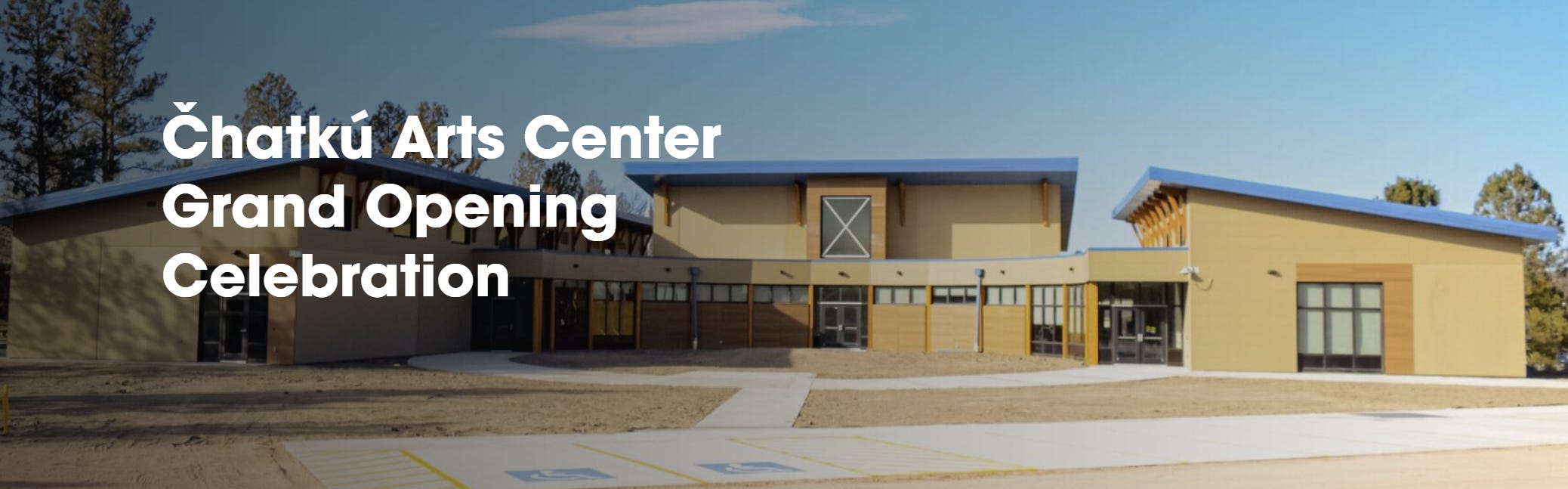
As a first-timer, the landscape was new to me as was the full history. I knew the "official US history” from school, but had not yet immersed myself in the story of the indigenous tribes such as the Oglala Lakota Nation who are one of the seven subtribes making up the Očhéthi Šakówiŋ (Seven Council Fires). I’m still working on learning that, so have very little to say about it other than I am once again never to trust “official US history”.
The grand opening of the Arts Center was also held contemporaneous with the 58th Annual Red Cloud Indian Art Show.
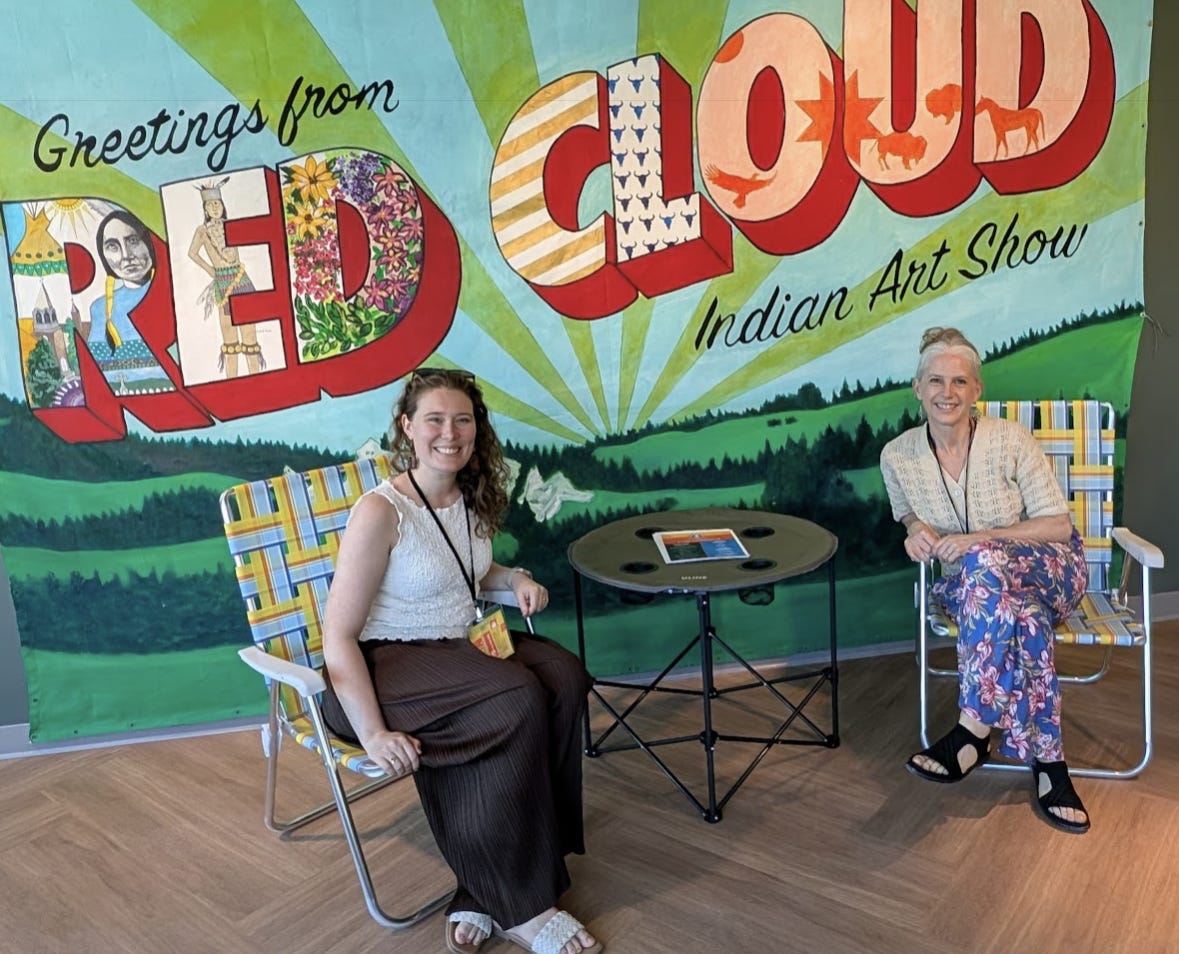
I knew about ledger art but had never seen it up close. As Alanna L Green writes in her post highlighting the ledger art of Terrance Guardipee on her Substack Heritage - Stand United:
Ledger art has a long history in Native American culture, dating back to the mid-19th century when Plains Indians were confined to reservations and no longer had access to traditional materials for creating art. They turned to using paper from government-issued accounting ledgers instead, hence the name “ledger art”. - Alanna Green
I was able to get up close and personal to ledger art on both a small and large scale at the Čhatkú Arts Center including a few pieces by Jim Yellowhawk, whose mixed media renditions that include ledger paper are provocative, colorful and combine his own unique melange of past and present.
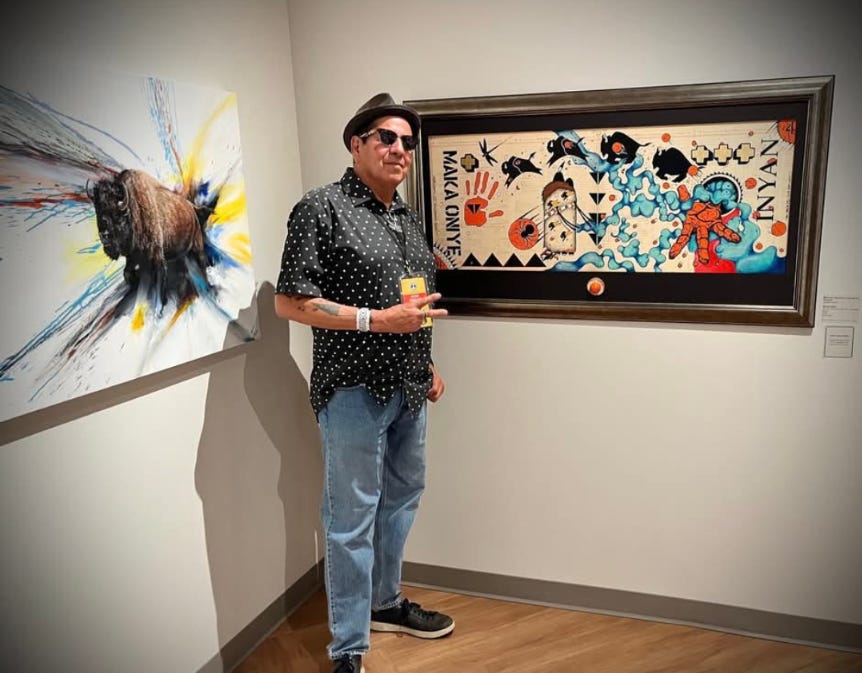
See, also, for example, his motorcycle ledger art, which he calls “Indians on Indians” and other art that has been transformed to eyewear! There is something about his style that just makes me want to sit down and start painting!
And, so I did. When I returned from the event to our hotel in Rapid City, SD, I pulled off a few of the free 11 x 17 maps sitting in the lobby and hurried off to my room to grab my watercolor paints. Gouache would have been better, but all I had was my travel set.
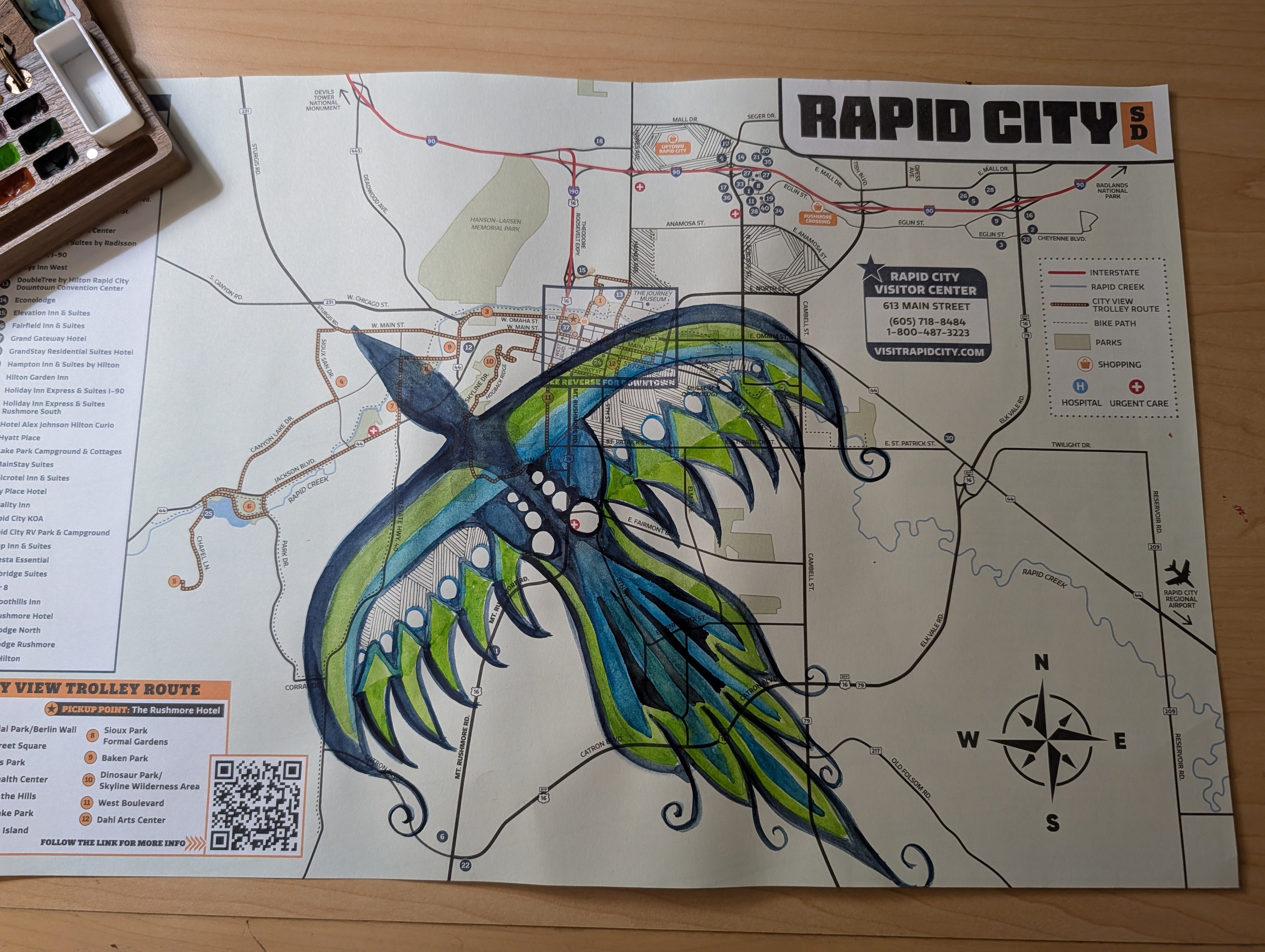
I also borrowed the linework technique of filling in existing geometric shaps from a print that I purchased at the Čhatkú Arts Center gift shop by Evans Flammond Sr.
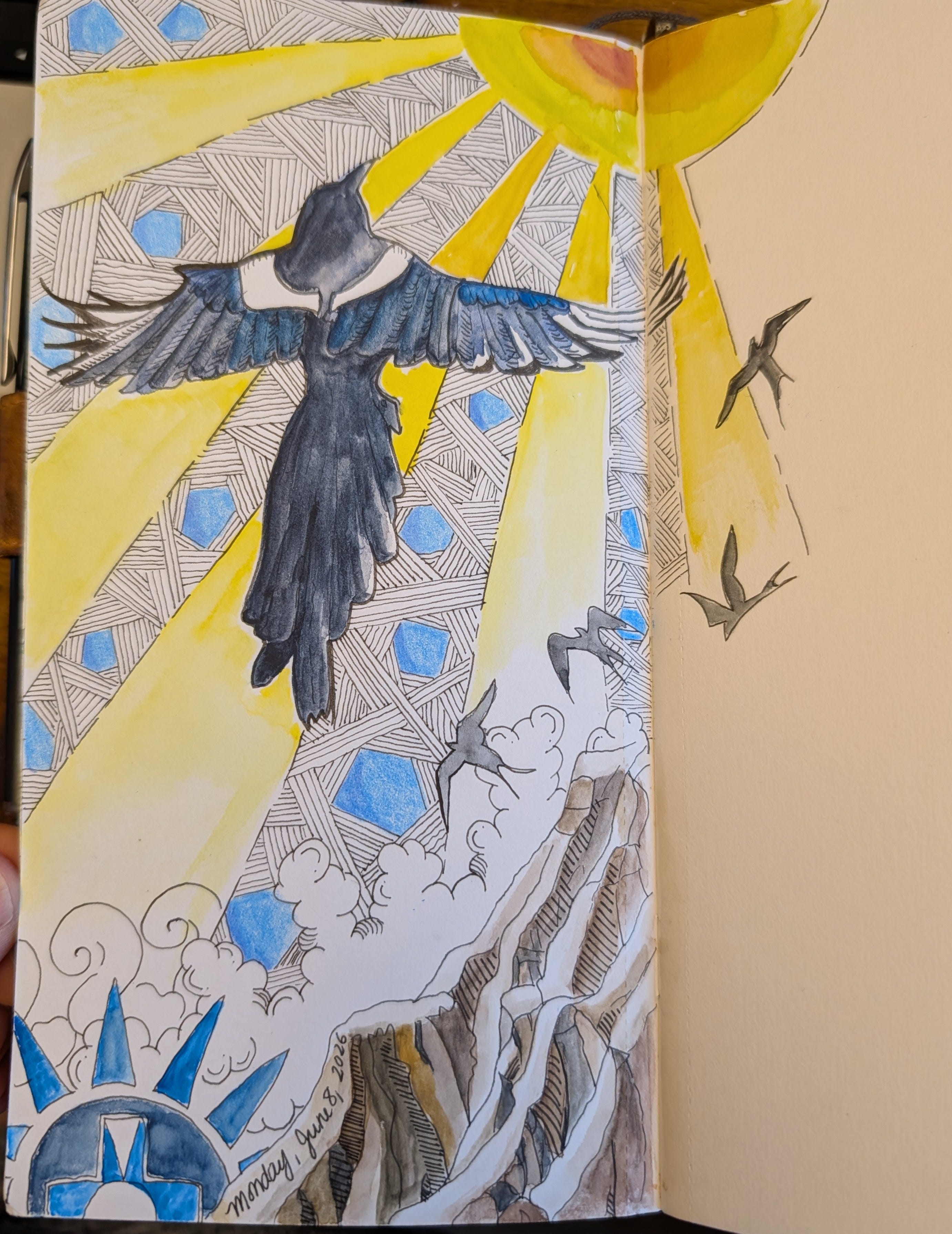
My obsession with magpies was fed by many sightings of these curious corvids over the remaining days of my short visit to the point that I found myself drawing more on the plane.
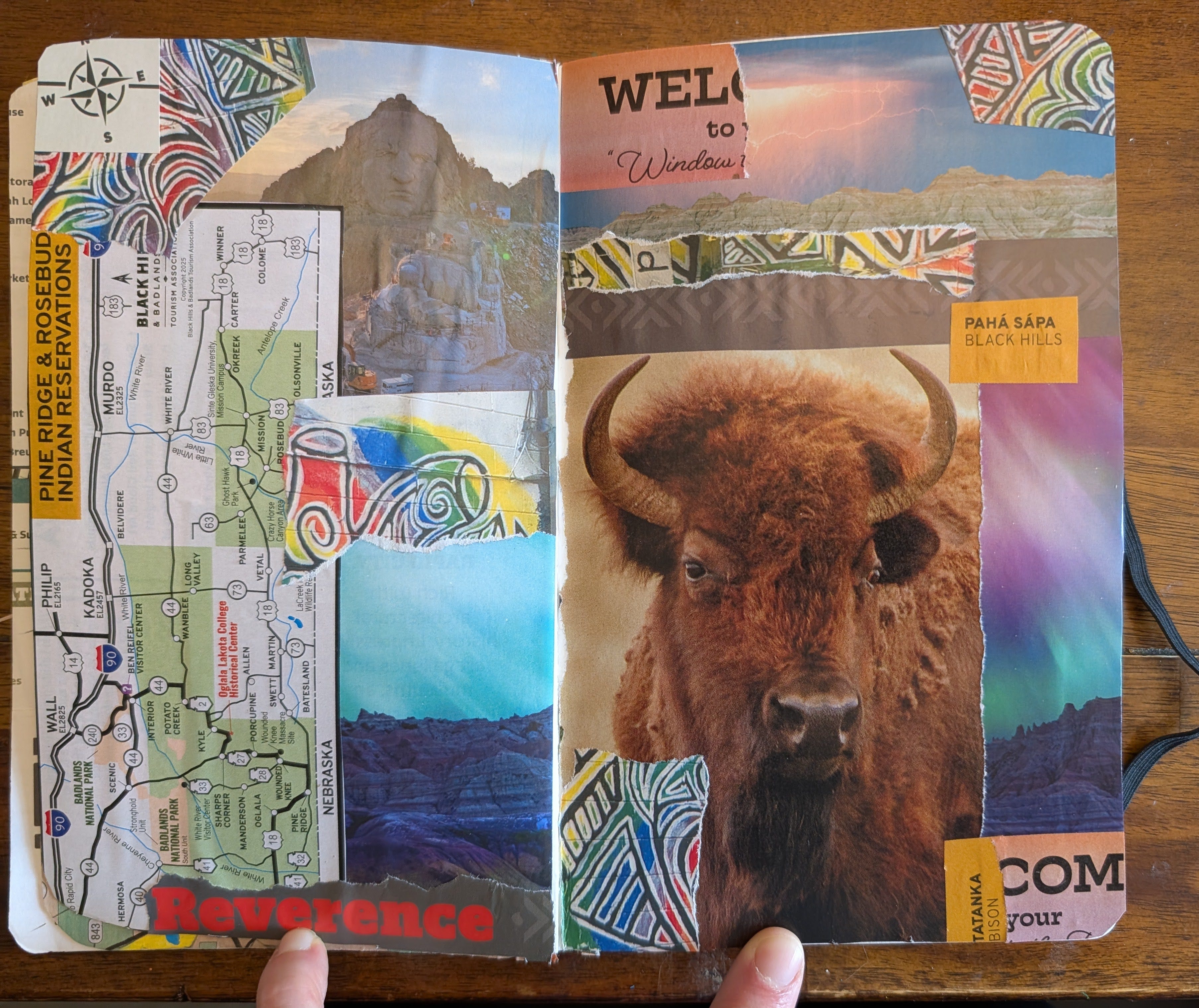
But, back to the maps. I collected a wide variety of paper maps and tourist material ranging from newspapers to magazines, so that when I returned home I could incorporate them into the substrate and paint over them, similar in a way to ledge art.
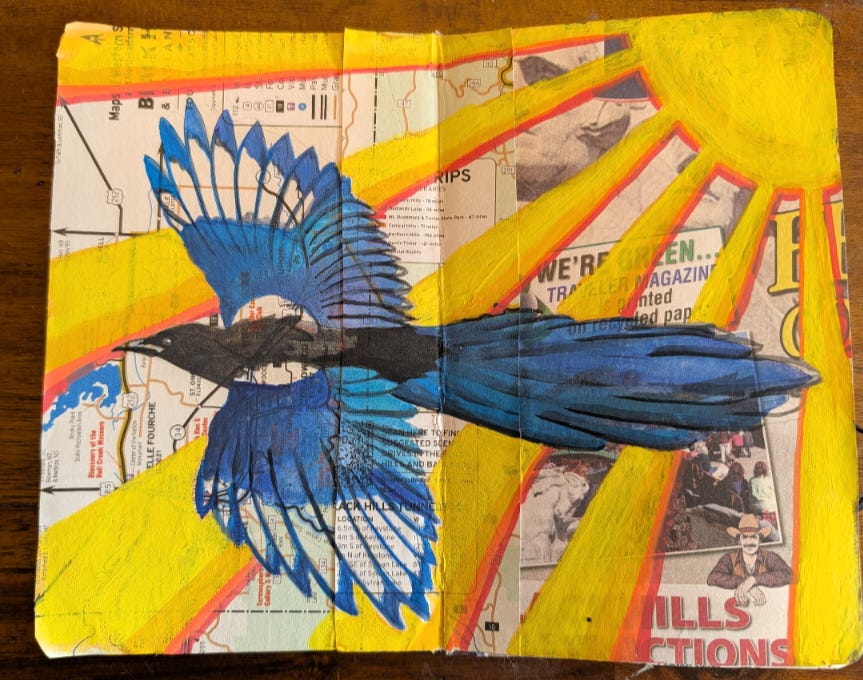
There was something satisfying about painting organic forms over the Mt. Rushmore facade and gridlined maps. Certainly, these spaces are not mine to recollect. But, I felt inspired to put their hubris and insidious history in the background, somehow reducing their power if only in the artistic form.
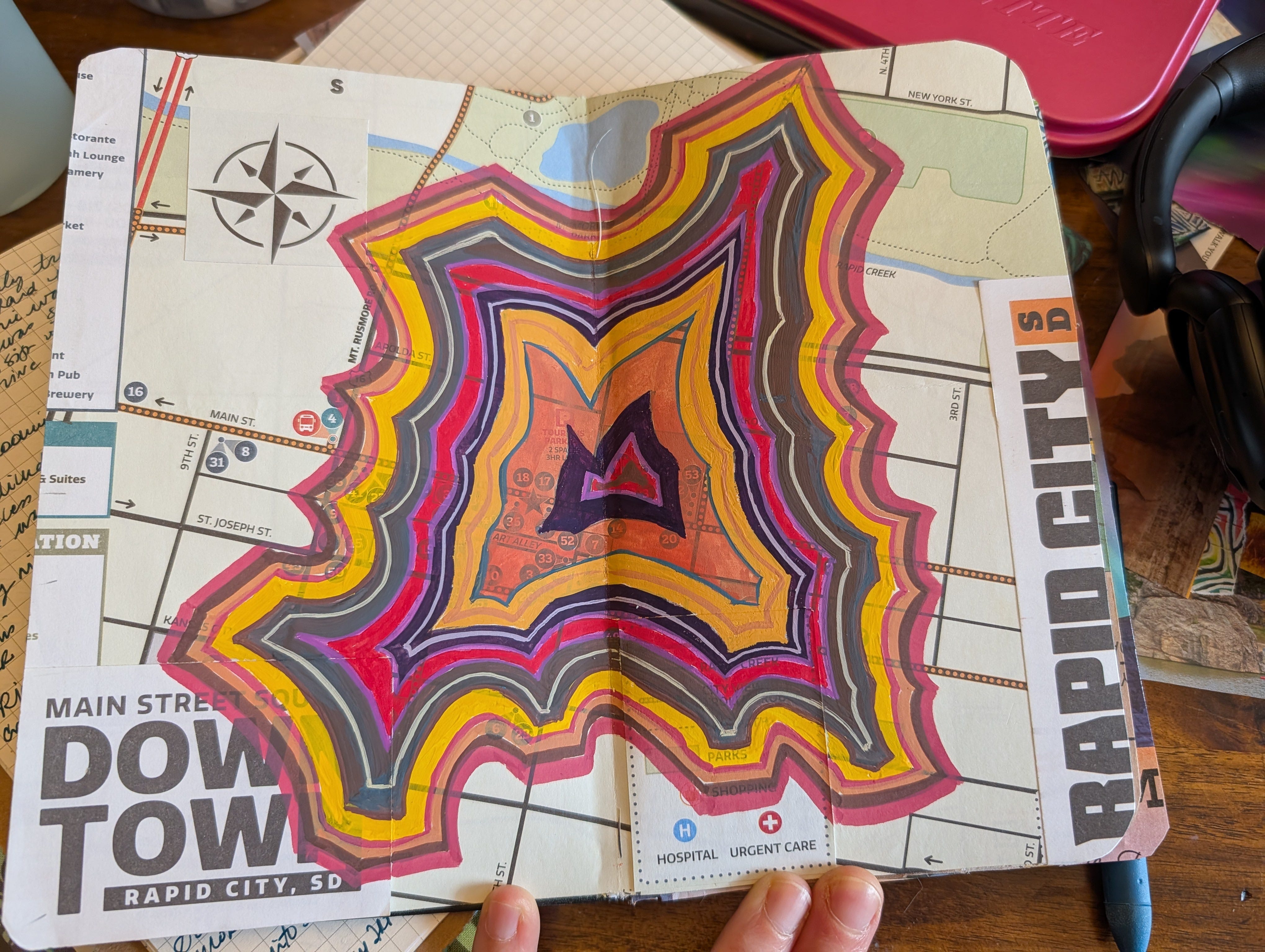
I was also very much inspired by the landscape and the rocks, particularly the agates that are found in the Pahá Sápa (Blackhills). One such artist that taught me how to incorporate the agates into art is Dustin Twiss of Twiss Gallery who uses the agate form as the inspiration for his art.
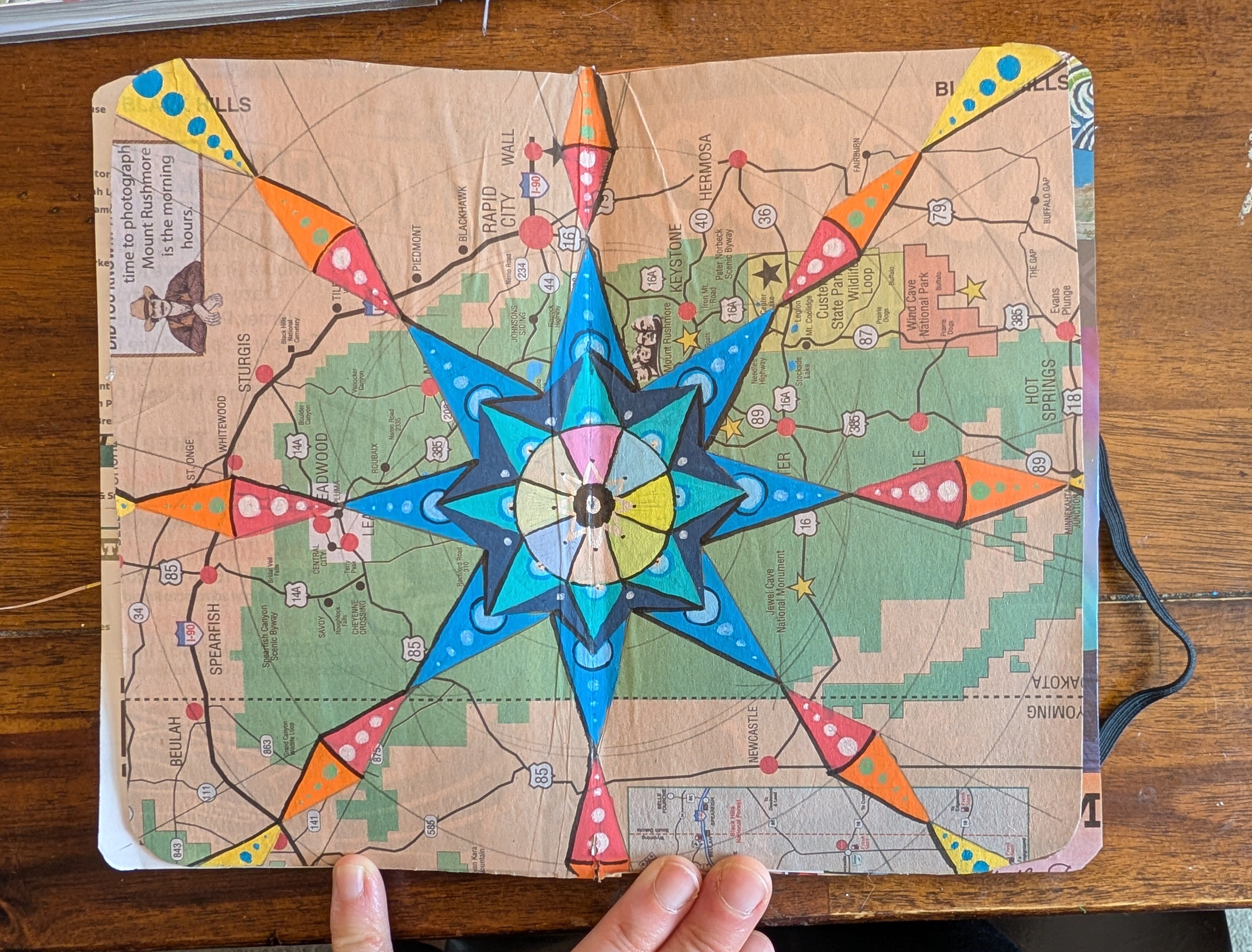
I also found myself drawn to the star - a motif found within much of Lakota art and the star blankets of course. I felt some satisfying continuity to draw this eight-pointed star (although it’s not exactly like the Lakota star in form) using my compass.
I also dabbled in just some good old collage, trying to pull together images that spoke to the majestic beauty of the Pahá Sápa and the misleading mythology of Black Hills Gold Rush and Custer’s “Last Stand.”
There is so much more that I would like to create from this trip as well as from other trips, but for now I will end this post here with the following encouragement:
take every opportunity to understand history, culture and place from all perspectives.
collect materials along your travels - papers, magazines and stickers!
Write about them during or when you return from your trip.
Incorporate these non-traditional substrates into your memory making art.
Thank you for reading! If you are new here…
I write on occasion about creative experiences in my life, specifically intersections of art, poetry, and community.

This is a beautiful map-based art piece, Emily.